Generate
Test Program Generation
From an ingested spec to a complete IG-XL project — Flow, TestInst, Limits, Binning and Pin Levels sheets, VBT modules, digital patterns — checked and repaired before an engineer sees it. The model drafts; the checkers decide.
Overview
Complete IG-XL programs from the spec — with test numbers that stay consistent from spec to program to production data by construction.
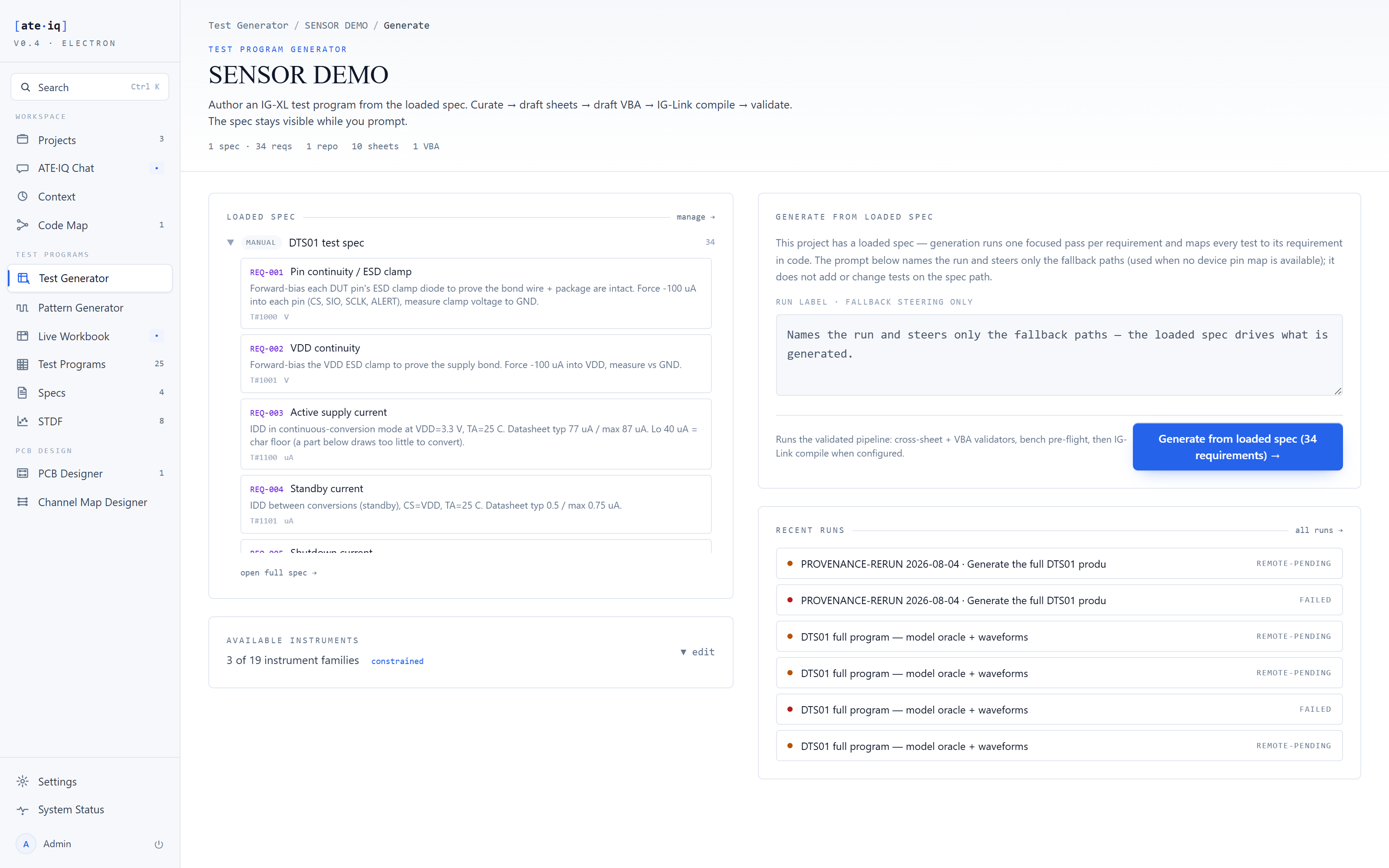
Serial and digital tests do not bit-bang: where a requirement needs a pattern, the program gets a real, deterministic pattern file rather than free-form vectors. And program and board match by construction rather than by luck.
Checked and repaired before you see it
Machine findings decide when a draft is done — not the model's own opinion of its work. Repair is bounded, not open-ended: a draft that cannot be brought clean is presented as it stands rather than polished indefinitely. And the engineer always sees the finding trail alongside the result, so a clean verdict is auditable and a failing one arrives with the evidence attached.
The checkers
Every draft passes deterministic checks grounded in a cited registry of real UltraFLEX knowledge — authored in our own words, every claim carrying its source, and checked against a working reference programme. What a check cannot judge, it declines out loud with a reason — never passed quietly.
From spec to workbook
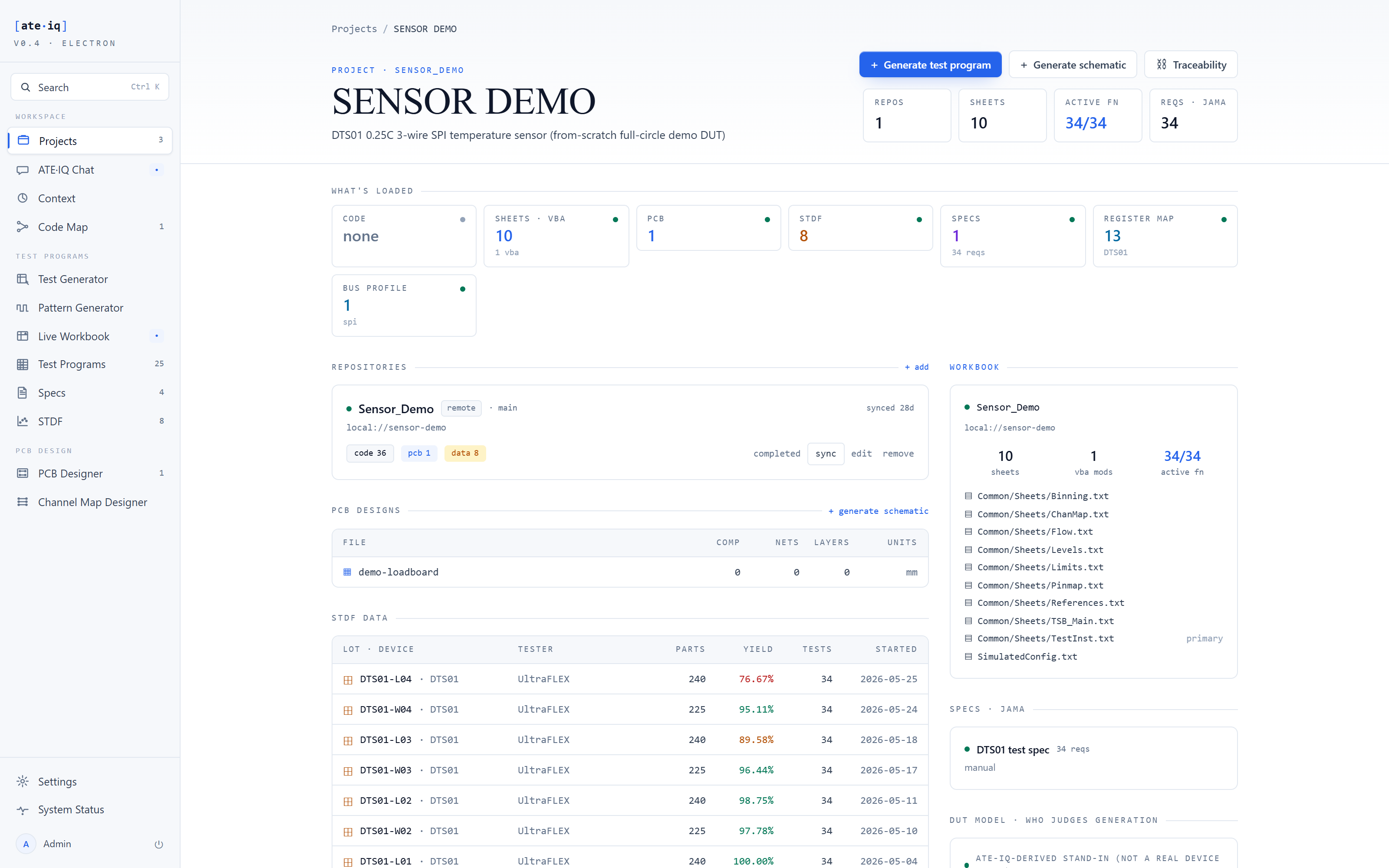
A run starts from the ingested spec — the device's pins, rails and instruments — and ends as a complete, validated workbook on the project page. The final authority is the vendor toolchain compiling the real workbook — and the platform labels which is which.
Proven end to end
On the demonstration project, a 34-requirement spec generates a complete program — 34 of 34 tests implemented, every test attributed to its pins, 24 deterministic SPI patterns emitted — and every test joins back to its requirement and forward to board nets and production lots without a single fuzzy match, by construction. Whether those tests do what the spec asked of this device is answered by Device-Model Verification.